
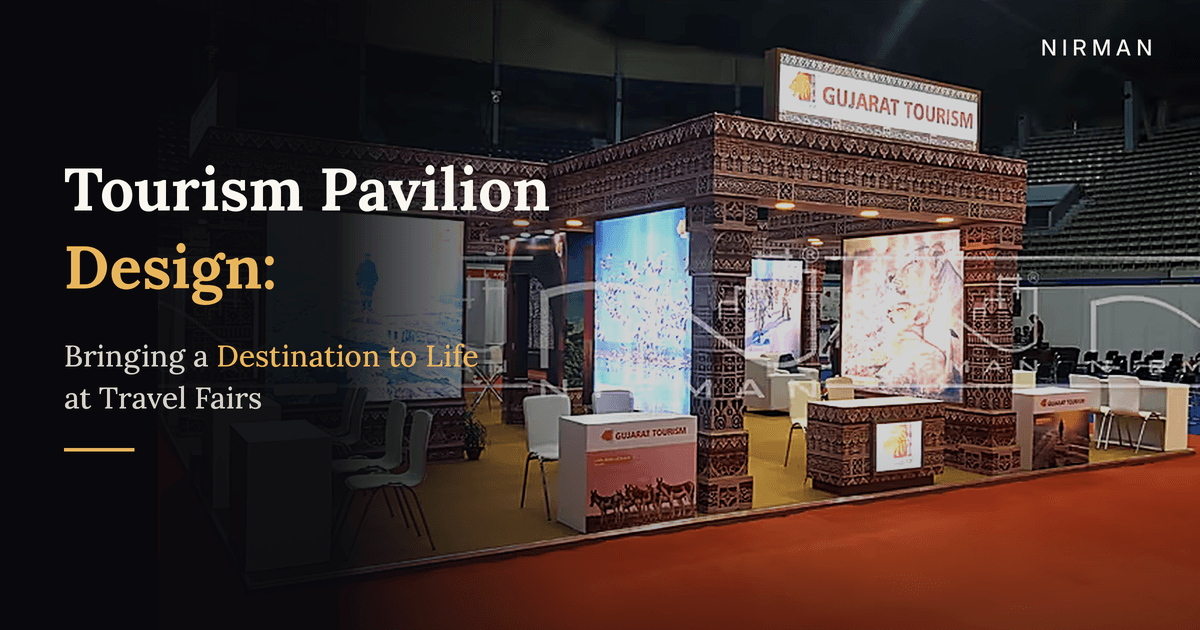
Tourism Pavilion Design: How to Bring a Destination to Life at a Travel Fair
At a travel fair, every pavilion is selling a place people have not visited yet. The ones that win do not hand out brochures; they make visitors feel the destination the moment they step in. Here is how to design a tourism pavilion that does exactly that.
At a travel fair, every pavilion is selling something the visitor cannot touch: a place they have not been to yet. Tour operators, travel agents and holidaymakers walk past dozens of destinations in a single afternoon, and most of them blur into one long row of mountain photos and beach posters.
The pavilions people remember are different. They do not explain the destination. They make visitors feel it, from the facade at the entrance to the last conversation at the counter.
This guide covers how state tourism boards, travel companies and hospitality brands can design a pavilion that brings a destination to life on the exhibition floor.
| Sell the Feeling, Not the Brochure
A visitor at a travel fair is not short of information. They can find hotel lists, distances and itineraries online in minutes. What they cannot get online is the feeling of standing somewhere.
Your pavilion's job is to give them a few seconds of that feeling. If a visitor walks in and senses the colours, textures and mood of the place, the brochure in their hand becomes a plan rather than paper.
Start every design decision with one question: what should a visitor feel when they step inside?
| Choose One Cultural Story
Every destination has more to offer than one pavilion can hold: heritage, wildlife, beaches, food, festivals and adventure. Trying to show all of it at once produces a crowded stall that says nothing clearly.
Pick one strong cultural thread and build around it. It could be:
- An architectural style, such as carved stone facades, temple arches, colonial verandahs or hill-station wood
- A traditional craft, such as textile patterns, terracotta, block prints or metalwork
- A landscape, such as desert, backwaters, tea gardens or snow peaks
- A festival or season the destination is famous for
The other attractions still belong in the pavilion. They simply sit inside one clear visual identity instead of competing with it.
| Let the Architecture Carry the Theme
The fastest way to signal a destination is through structure, not signage. A carved heritage facade, a row of arches or a traditional roofline is recognised from across the hall long before anyone reads the name.
You do not need real stone or antique wood to achieve this. CNC-cut panels, textured finishes and high-resolution printed surfaces can recreate intricate patterns at a fraction of the weight and cost, and they are far easier to transport, install and reuse.
A strong facade does the work of ten banners. Visitors recognise the destination before they read its name.
Keep the structure open enough to walk into. A heavy, enclosed facade looks impressive in a render but can feel like a closed door on the show floor.
| Use Big, Backlit Visuals
Exhibition halls are often dim, and destination photography needs light to come alive. Backlit fabric panels and LED light boxes make landscapes glow in a way that printed flex never can.
- Choose fewer, larger images. One breathtaking view per panel works better than a collage of twelve small photos.
- Use real, high-resolution photography. Low-quality images look worse when they are enlarged and lit.
- Frame visuals within the theme. Set light boxes inside carved panels or arches so the photographs feel part of the architecture.
- Keep text minimal. A place name and a single line are enough on a visual panel.
| Plan the Layout for Two Audiences
Most travel fairs have trade days and public days, and the two audiences want very different things.
Trade visitors such as tour operators and travel agents want seated meetings, partner contacts and business discussions. Public visitors want inspiration, quick answers and something to take home.
A good tourism pavilion serves both:
- An open front zone with visuals and an information counter for walk-in visitors
- A quieter meeting area with tables and chairs for trade discussions
- Partner counters if hotels, tour operators or regional bodies are exhibiting under your pavilion
- Clear circulation so a crowd at the front does not block access to the meeting tables
| Bring in the Other Senses
A destination is more than what it looks like. Pavilions that add sound, taste or touch hold visitors much longer.
Soft regional music, a live craft demonstration, a cultural performance at fixed times, or a small tasting of local tea or sweets (where the organiser permits it) all turn a walk-through into an experience. Even a VR viewer or a looping drone video can give visitors a moment of standing in the destination itself.
Plan these elements during design, not after. A performance needs space, a demo needs power and storage, and food sampling needs organiser approval.
| Build It to Travel
Tourism boards rarely attend just one fair. The same pavilion may appear at several travel fairs across India in a single season.
Designing for reuse from day one makes a big difference:
- Modular structure that can be resized for different floor areas
- Durable, fire-safe materials that survive repeated assembly and transport
- Replaceable graphics so visuals can be updated for each fair or campaign
- Proper storage between events so finishes stay sharp
A pavilion built to travel is also built better, because every joint and panel is made to be assembled again.
| Mistakes Tourism Pavilions Often Make
- Too many themes at once. Heritage, wildlife, beaches and adventure all competing on the same walls
- Stock-looking photography. Generic images that could belong to any destination
- A facade with no way in. Impressive from the aisle, but uninviting up close
- No space for trade meetings. Serious buyers leave when there is nowhere to sit and talk
- Forgetting the lighting. Even beautiful visuals look flat under general hall lighting
| Working With Nirman
We have designed and built themed pavilions for travel and tourism fairs, bringing heritage architecture, cultural detailing and large-format backlit visuals onto the exhibition floor. With 28+ years of experience and 878+ projects delivered, we handle every stage: theme development, 3D design, fabrication in our Kolkata workshop, on-site installation and dismantling.
Whether you represent a state tourism board, a travel company or a hospitality brand, get in touch with us to plan a pavilion that makes your destination impossible to walk past.
| Frequently Asked Questions
What makes a tourism pavilion different from a regular exhibition stall?
A regular stall usually sells a product or service. A tourism pavilion sells an experience and a place, so it relies much more on atmosphere, cultural design and large visuals than on product displays.
How can a pavilion show a destination's culture without being too heavy or expensive?
CNC-cut panels, textured finishes and printed surfaces can recreate carved stone, wood and craft patterns convincingly. They are lighter, more affordable and easier to transport than the real materials.
Should a tourism pavilion have a meeting area?
Yes, if you attend trade days. Tour operators and agents want to sit and discuss business, and a quiet meeting zone often produces the most valuable conversations of the fair.
Can the same pavilion be used at different travel fairs?
Yes, if it is designed to be modular. A reusable structure with replaceable graphics can be resized for different floor areas and updated for each event.
How early should we start planning a tourism pavilion?
Ideally two to three months before the fair. Themed pavilions involve detailed design, custom fabrication and photography selection, so starting early avoids a rushed build.
| Conclusion
A tourism pavilion succeeds when visitors stop reading about a destination and start imagining themselves there. Choose one cultural story, let the architecture tell it, light your visuals properly, plan for both trade and public visitors, and build the whole thing to travel.
Do that, and your pavilion will not just stand out in the hall. It will send people home already planning their trip.
Planning a pavilion for your next travel fair? Contact Nirman for a free consultation and 3D concept. You may also find our 90-day exhibition planning timeline useful as you prepare.
Planning an exhibition? Let's talk.
Get a free consultation and 3D concept for your next exhibition stall.